Articles
In some ways, the past few months at Humanities Texas have felt like business as usual.
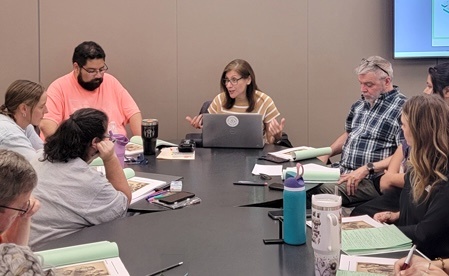
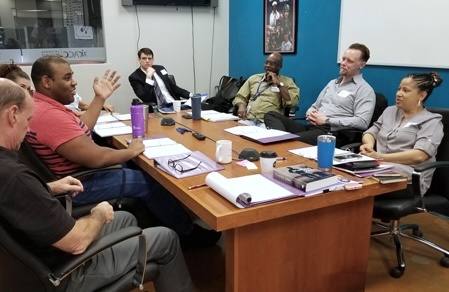
In May, we announced the fifteen winners of our annual Outstanding Teaching Awards. Then, in June and July, we conducted a series of in-person and online professional development programs for Texas teachers, including residential institutes on U.S. history from 1980 to 2008 at Texas Tech University, twentieth-century Texas history at the University of North Texas, teaching writing at the secondary level at The University of Texas at Austin, and teaching contemporary popular literature at the University of Houston.
As in previous years, teachers' evaluations were overwhelmingly positive, with many noting the significant impact of the programs on their intellectual and professional development. A San Antonio teacher who attended the "Teaching Writing" institute in Austin wrote:
It is really difficult to talk about a Humanities Texas Summer Institute without sounding hyperbolic. This institute treated teachers as real professionals, as masters of their craft, as skilled practitioners who are engaged in an immensely difficult task each and every year. Throughout the week, teachers were provided with data-driven pedagogical practices to improve all kinds of student writing. Every teacher in the state of Texas could benefit from the resources, tools, strategies, and methods to help their students become better readers, writers, and, with that, better learners who, inevitably, will be better citizens. More teachers need to be made aware of the range of resources provided by Humanities Texas. Teachers need summer institutes such as these. Teachers need Humanities Texas.
Of course, as familiar as our annual cycle of programs can feel, Humanities Texas is not currently operating under normal conditions.
We continue to reckon with the most significant challenge our organization has faced in its fifty-three years. The federal funds that Congress appropriated for the state humanities councils have been drastically cut, and the prospect of future federal support is hardly assured. In Texas, this has had a profound impact on our programs, organizational stability, and capacity to plan for the future.
Why is federal funding so critical?
For decades, Humanities Texas has pursued our mission as a public-private partnership, leveraging federal dollars from the National Endowment for the Humanities (NEH) with state and private resources. NEH funds not only support our service to Texans statewide but also catalyze local contributions from individuals, foundations, and corporations.
Federal funding also brings an essential kind of accountability. It underscores the "public" aspect of our identity as a public-private partnership. Unlike many private funders, which often limit their giving to specific geographic regions, Humanities Texas serves communities in each of the state's thirty-eight congressional districts.
Over the years, teachers from nearly two-thirds of the state's 1,207 school districts have participated in our professional development workshops and institutes. Meanwhile, our grants and traveling exhibitions programs deliver valuable services to museums and libraries statewide, especially those in areas that lack easy access to private philanthropy.
While our office is in Austin, we are local to every Texas community.
My colleagues and I are deeply grateful for the remarkable level of support we've received over the past three and a half months. That support is a testament to the importance of our service to communities statewide. We are delighted that it enables us to resume several programs that we paused in the spring.
- On August 1, we will resume our rural grants program with private support. We will also launch a new grant line that supports the rental and display of Humanities Texas traveling exhibitions.
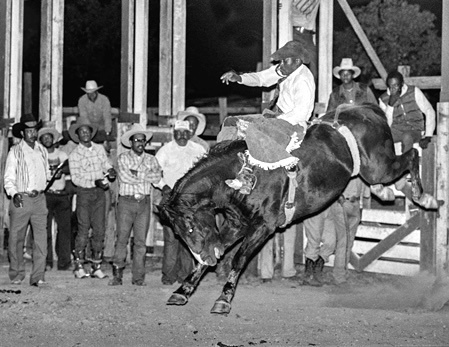
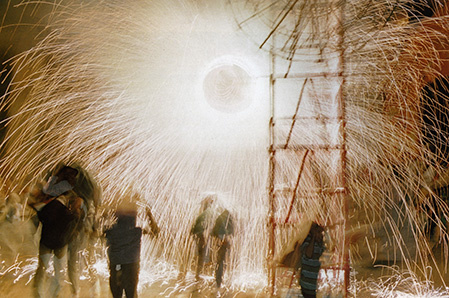
- Thanks to the generosity of the Permian Basin Area Foundation and the Tejemos Foundation, two of our exhibitions—Soul Circuit: Juneteenth Rodeos in Texas and Mexican Fiestas—are circulating throughout the state. We will soon have several new titles available, including The Life and Literature of J. Frank Dobie, Of Birds and Texas: The Art of Stuart and Scott Gentling, Tom Lea: Brushstrokes from the Frontlines, and an exhibition of vintage Austin music posters. Stay tuned for announcements about their availability in the coming weeks.
- We are moving full steam ahead with our programs for Texas teachers, which are supported with state and private funds. We will announce our fall professional development workshops and webinars in our August newsletter. In September, we will issue a call for nominations for our 2026 Outstanding Teaching Awards.
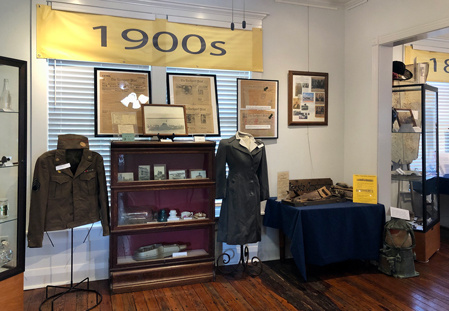
Still, several of our core programs remain paused due to the cuts to our federal funding—our reading and discussion program for veterans, our public lectures and film screenings, and our family literacy program. These initiatives are an important part of our service to the state, and each represents an opportunity for targeted support. Please be in touch if you'd like to discuss the possibility of securing private funding to bring one of these programs to your community.
My deepest thanks to our friends and partners who have been there for us in this moment of need. Please stay in touch.