Articles
The Rosenberg Railroad Museum aims to preserve railroad history and its role in the development of Fort Bend County while educating the community through engaging public programs. Humanities Texas recently awarded the museum a grant to support Tales from the Rails, an exhibition exploring the lives and experiences of railroad workers throughout American history. Members of our grants team spoke with Executive Director Rainey Webster and Programs Director Tracy Hobdy about the organization's work in the humanities and their upcoming exhibition.
Interview with Executive Director Rainey Webster and Programs Director Tracy Hobdy
Please tell us about your organization.
The Rosenberg Railroad Museum was founded in 1992 as a nonprofit organization dedicated to preserving the rich history of Fort Bend County and the southeast Texas region. We strive to be a meeting place for the community to bring people together.
Please tell us more about your roles within the organization.
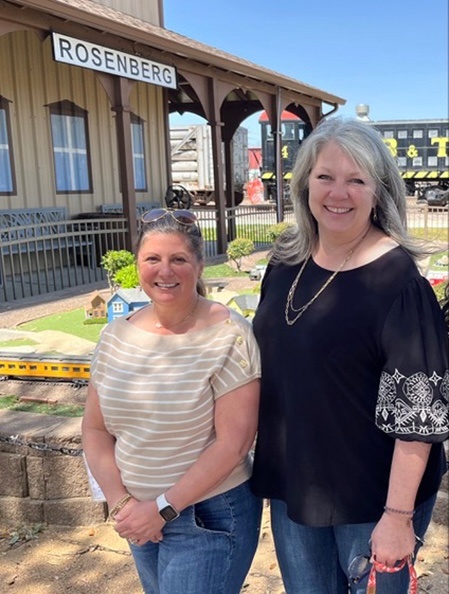
Rainey Webster: I am the Executive Director, but I like to call myself the "facilitator of fun and dreams." That comes down to vision, strategy, and working with the staff on different programs from education and exhibitions to construction and grounds projects. I also work closely with the Board of Directors to develop museum strategies and policies. It's a fun and diverse role—never boring!
Tracy Hobdy: As the Programs Director, I coordinate the volunteer, outreach, and education programs. I also work with our Exhibit Collections Coordinator on exhibitions and grant writing.
Please tell us about your recently awarded grant.
TH: The idea behind the Tales from the Rails exhibition is to collect stories from people who worked with objects similar to the artifacts in our collection to get a deeper sense of their experiences on the railroads. The stories we have gathered through conducting interviews with current and retired railroad employees have been amazing. It's been neat to meet all these workers, hear their stories, and learn more about the "brotherhood" of railroading.
We have a lot of visitors who tell us about family members who worked for the railroad. There's always that connection, so we hope this new exhibition will encourage more of those stories to be shared. In fact, there will be an aspect to the exhibition where visitors can leave us their stories or connect with us so we can capture those experiences later. It's turning out to be a really fun exhibit!
Who or what makes your work possible?
TH: We're lucky to be in Fort Bend County, where we have many amazing local foundations that support us. Statewide organizations such as Humanities Texas and the Summerlee Foundation also help to make our work possible. Additionally, the guests who come by and our volunteers, donors, and sponsors ensure that our work continues.
RW: We have a nice mix of buy-in from our community, including small businesses and partnerships with other nonprofits. We are blessed to work with so many foundations that believe in what we're doing. They see the work and impact we're making in the community—there's nothing more rewarding than that.
What is your favorite program you've ever done?
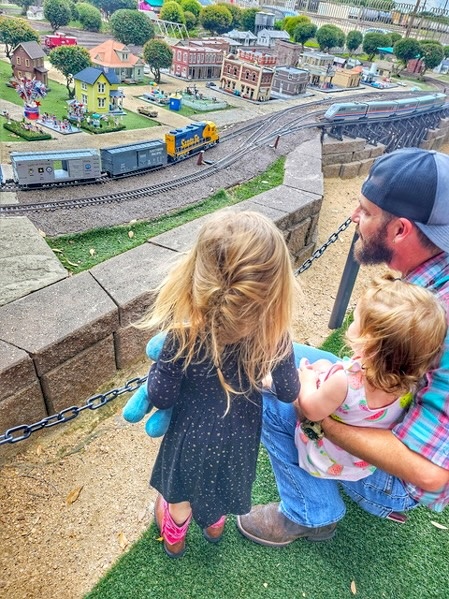
TH: For me, it's our Different Perspectives program we held about two years ago. To celebrate National Model Railroad Month in November, we partnered with local high schools to invite photography students to come to the museum to take photos of our model trains. Our volunteers set up the railroad layouts and operated the models, allowing students to capture images with a camera or their phone. They then headed back to their school, edited the photos, and submitted them back to us. We displayed every photo for an exhibit that was on view at the museum from November through December. With support from our board and community partners, we awarded a scholarship prize for "best of show" and hosted an exhibit reception, inviting students to show their work to friends and family at the museum.
RW: I didn't realize the impact that this program would make. We received a lot of feedback from the participating high schools' teachers about the students' excitement and changed mannerisms. Once the students visited the museum and got back to campus, there was collaboration between them. Students came out of their shells, and the project seemed to be a real confidence booster for many. From a museum perspective, we were thrilled because the teenage demographic can be challenging to reach.
If someone is in your area of the state, where would you suggest they visit?
RW: Come to the Rosenberg Railroad Museum—you'll love it here! Also, check out downtown historic Rosenberg. It has buildings from the late 1800s with lots of history, restaurants, and shops. Then I would say go over to Richmond to the Fort Bend Museum, where you can learn about the county. Then to George Ranch—a working ranch with cowboys, blacksmiths, and living history. They also do historic home tours and cattle-working demonstrations.
Humanities Texas grants enable communities throughout the state to develop programs of local interest promoting history, culture, and education. Visit the Grants section of our website for more information.