Articles
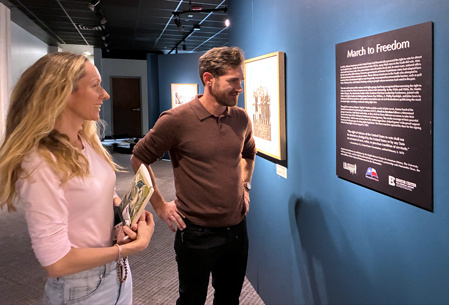
Throughout Black History Month, the Irving Archives and Museum is hosting March to Freedom, a Humanities Texas traveling exhibition curated by the Dolph Briscoe Center for American History at The University of Texas at Austin.
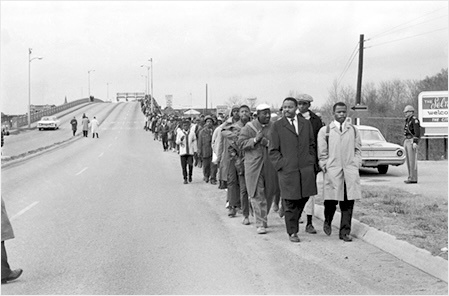
In 1965, civil rights activists organized three marches from Selma to Montgomery, Alabama, to demand equal voting rights for Black Americans. Media coverage of the peaceful demonstrations, which at times faced violent opposition, helped galvanize the public support needed to pass voting rights legislation. Among those documenting the events was young photojournalist James “Spider” Martin of the Birmingham News. Through Martin’s camera and the words of late Congressman John Lewis, former head of the Student Nonviolent Coordinating Committee (SNCC), March to Freedom follows a determined group of marchers, both black and white, as they tried on three different occasions to take their cause to the steps of the Alabama Statehouse in Montgomery.
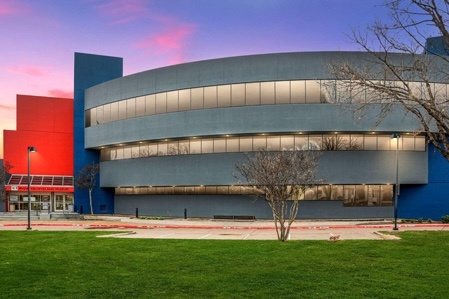
The Irving Archives and Museum (IAM) provides thought-provoking programming and exhibitions on history and culture for Irving residents and the surrounding community. Earlier this month, Humanities Texas Director of Exhibitions Andy Ross visited IAM and spoke with Clare Hulfish, education and programs manager, about the organization's work and why they chose to host March to Freedom.
Interview with Education and Programs Manager Clare Hulfish
Please tell us about your organization.
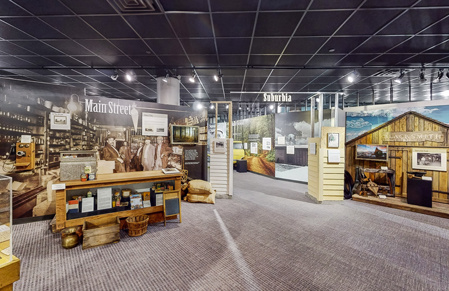
The Irving Archives and Museum is a city-run museum dedicated to preserving and interpreting Irving’s local history while connecting it to broader state and national stories. Located in the heart of downtown Irving, the museum serves a diverse and growing community and emphasizes exhibitions and programs that are accessible, welcoming, and rooted in lived experience.
What is the most important thing people should know about your interpretive work?
Our interpretive approach centers on storytelling that connects local history to broader social, cultural, and civic themes. Through dynamic exhibitions and public programs, we invite dialogue and curiosity and help visitors explore how the past continues to shape the present.
What made you interested in the March to Freedom exhibition?
March to Freedom strongly aligns with our mission to engage visitors with history in ways that are meaningful and relevant. The exhibition allows us to explore the civil rights movement as both a national story and a lived experience, connecting themes of civic engagement and social change to our local and regional context.
How have visitors responded to the exhibition?
Visitors have responded with strong engagement, often noting how the images and themes in the exhibition echo events they see in today’s headlines. Many have reflected on the enduring role of protest in American history and how the struggle for civil rights remains an active and ongoing part of civic life.
March to Freedom is on display at IAM through March 22, 2026. The museum is also hosting A Time Before Texas, a Humanities Texas traveling exhibition created by the Texas Department of Transportation, on view through March 19, 2026.
Both exhibitions are available to reserve through the Humanities Texas traveling exhibitions program. To learn more about bringing an exhibition to your community, please contact our exhibitions coordinator at exhibitions@humanitiestexas.org.