Articles
The Texas Collections Emergency Resource Alliance (TX-CERA) is a statewide network that helps cultural heritage organizations prepare for and respond to emergencies affecting their collections. Earlier this month, TX-CERA conducted a two-day, in-person workshop, From Risk to Resilience: An Introduction to Emergency Preparedness for Texas Cultural Heritage Institutions, at the Witte Museum in San Antonio.
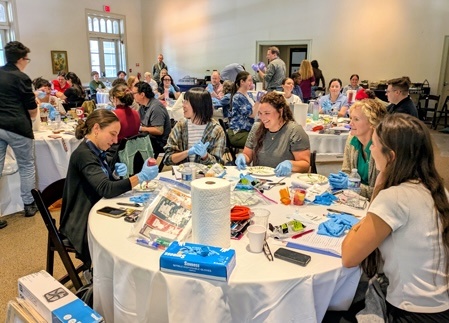
The workshop brought together more than forty cultural heritage professionals from museums, archives, libraries, historic sites, and allied organizations across Texas, providing practical knowledge, hands-on experience, and opportunities to connect with colleagues who share a commitment to protecting Texas's cultural resources. The workshop marked TX-CERA's first in-person event as part of its Blue Sky Initiative (BSI), which supports proactive emergency preparedness and resilience among Texas cultural heritage institutions.
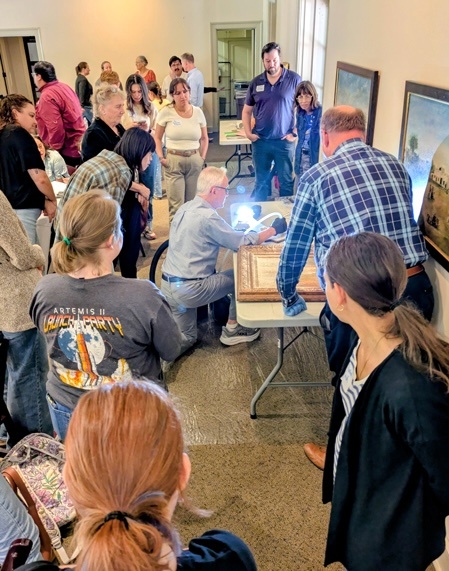
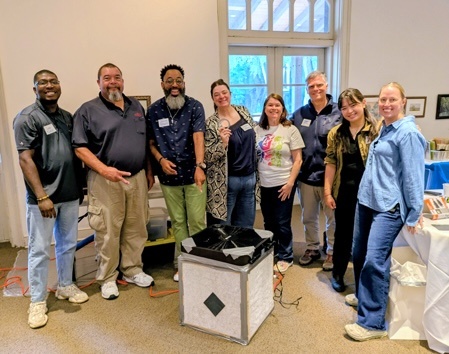
Instructional presentations with related hands-on activities were spaced throughout each day. Participants were encouraged to regularly assess the effectiveness of their emergency preparedness and response plans by conducting periodic drills and tabletop exercises to think through a range of possible disaster scenarios. They worked collaboratively through an Incident Command System (ICS) Heritage Response exercise, practiced effective donning and doffing of personal protective equipment (PPE), and learned how to construct a Corsi-Rosenthal emergency air-purification filter.
Additional activities focused on disaster documentation methods using a system designed to record damage and collect the information necessary to plan and support effective emergency response and recovery efforts. Attendees also received information on wet- and fire-salvage techniques for cultural heritage collections, gaining exposure to the considerations and challenges involved in stabilizing collections affected by disaster. The critical importance of understanding mental health-related impacts in a disaster recovery environment was also introduced.
Each workshop attendee received a "go bag" filled with essential PPE, on-the-go references, and basic tools and supplies.
Conversations throughout the two days highlighted the range of risks facing cultural institutions across Texas and underscored the value of preparedness, collaboration, and shared resources. The willingness of attendees to contribute their own perspectives and experiences created a dynamic learning environment that enriched the program for everyone involved.
Workshop presenters and facilitators included:
- Jared Yax, a firefighter with museum curation and collection care experience
- Kara Griffin, an archaeologist, educator, and emergency management professional experienced in public safety, emergency preparedness, and disaster response
- Rebecca Kennedy, independent collections care professional specializing in emergency preparedness and response
- Ashley Carter and James Mendoza from the San Antonio Office of Emergency Management
- Monica Schoch-Spana, a medical anthropologist, professor, and director of the Public Health Degree Program at Texas A&M University-San Antonio
- Patrick McGrath, a property restoration and disaster remediation specialist for Belfor
- A contingent of TX-CERA conservators and cultural heritage emergency responders.
TX-CERA thanks everyone who attended, enthusiastically shared their expertise, and helped create a positive and productive experience, as well as the Witte Museum and the city of San Antonio for hosting this event. Few locations are better suited for a discussion about preserving cultural heritage. Surrounded by a vibrant cultural landscape, attendees were reminded of the importance of protecting the stories, collections, and places that connect communities to their past, and of why preparedness and resilience are essential to the stewardship of our shared heritage.
Finally, TX-CERA extends its gratitude to the National Endowment for the Humanities and workshop sponsors, Otego and BELFOR, for their support and their commitment to strengthening preparedness and resilience within the cultural heritage community.
TX-CERA looks forward to building on this momentum to increase resilience within Texas cultural heritage communities through programs planned for the second and third years of the Blue Sky Initiative.
For resources and more information, please visit TX-CERA's website at www.txcera.org.
Humanities Texas maintains a list of disaster response and recovery resources from across Texas and the nation for cultural institutions and arts organizations. These resources include guidance on protecting and preserving historic properties, humanities collections, personal archives, and family heritage items. We will continue to update this list throughout 2026.