Articles
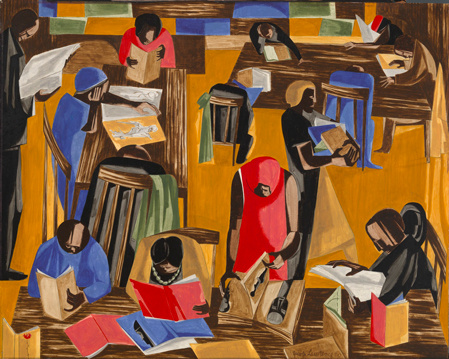
This summer, Humanities Texas will conduct four in-person professional development programs for social studies and English language arts teachers. Programs include "Digital Humanities Teaching Tools" (Fort Worth, June 1–4), "Teaching the American Revolution at 250" (Austin, June 8–11), "Teaching the American Literary Tradition at 250" (Austin, June 15–18), and "Teaching World War I and World War II" (College Station, June 22–25).
Program partners include Texas Christian University, The University of Texas at Austin, and Texas A&M University.
All programs will emphasize close interaction with scholars, the examination of primary sources and texts, and the development of effective pedagogical strategies and engaging assignments and activities.
Stay tuned for an announcement about July webinars!
Digital Humanities Teaching Tools
"Digital Humanities Teaching Tools" will take place at Texas Christian University in Fort Worth from June 1–4, 2026. Topics to be addressed include artificial intelligence, online educational resources, and digital archives. Presentations will also address how to develop students' critical thinking, writing, and communication skills.
Amanda Licastro (Swarthmore College) will serve as the faculty director for the institute. Presenters include Courtney Abubakar (Texas History for Teachers), Amy Earhart (Texas A&M University, Humanities Texas Board of Directors), Annie Evans (New American History, University of Richmond), Sarah Z. Johnson (Madison College), Remi Kalir (Duke University), Jojo Karlin (City University of New York), Anna Lacy (Haverford College), Nathan Murray (Algoma University, Ontario), and Lorena Gauthereau and Gabriela Baeza Ventura of the University of Houston.
Teaching the American Revolution at 250
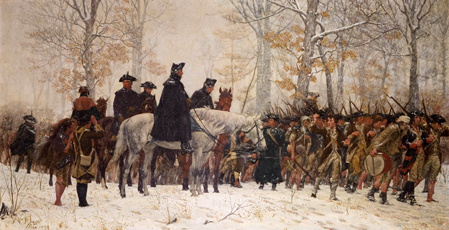
"Teaching the American Revolution at 250" will take place at the Thompson Conference Center at The University of Texas at Austin from June 8–11, 2026. Topics to be addressed include the American colonies on the eve of the American Revolution; the Imperial Crisis; women, American Indians, and African Americans during the Revolutionary era; the Declaration of Independence; the American Revolutionary War; international perspectives; the Articles of Confederation and the crisis of the 1780s; the Constitutional Convention of 1787; and the immediate and long-term legacies of the American Revolution.
Denver Brunsman (George Washington University) will serve as the faculty director for the institute. Presenters include Leslie Alexander (Rutgers University), Richard Bell (University of Maryland), Lauren Duval (University of Oklahoma), Charles Flanagan (educational consultant), Lorri Glover (Saint Louis University), Ricardo A. Herrera (U.S. Army War College), Joseph F. Kobylka (Southern Methodist University), Kieran O’Keefe (Lyon College), and Serena Zabin (Carleton College).
The institute is part of our teacher programming in 2025–26 commemorating the United States Semiquincentennial.
Teaching the American Literary Tradition at 250
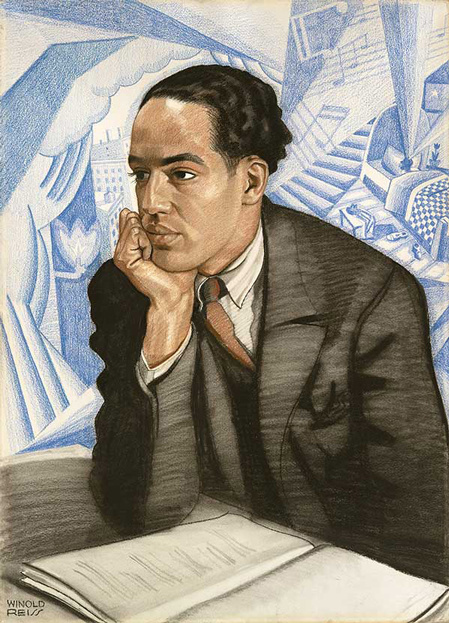
"Teaching the American Literary Tradition at 250" will take place at the Thompson Conference Center at The University of Texas at Austin from June 15–18, 2026. Topics to be addressed include the American Renaissance, American realism, American modernism, and the Harlem Renaissance; texts of the American Revolution, Civil War, World Wars, and civil rights movement; and women's, immigrant, and Texas voices. Presentations will also address how to develop students' critical thinking, writing, and communication skills.
Coleman Hutchison (The University of Texas at Austin) will serve as the faculty director for the institute. Presenters include Julie Buckner Armstrong (University of South Florida), Greg Barnhisel (Duquesne University), Nathaniel Cadle (Florida International University), Elizabeth Chapman (Houston ISD, Humanities Texas Board of Directors), Randall Fuller (University of Kansas), Lorri Glover (St. Louis University), Jonna Perrillo (The University of Texas at El Paso), Ryan Sharp (Baylor University), Claudia Stokes (Trinity University), Steven Trout (University of Alabama), and Oscar Cásares, Stephen Enniss, John Morán González, Bret Anthony Johnston, and Cathy Schlund-Vials of The University of Texas at Austin.
The institute is part of our teacher programming in 2025–26 commemorating the United States Semiquincentennial.
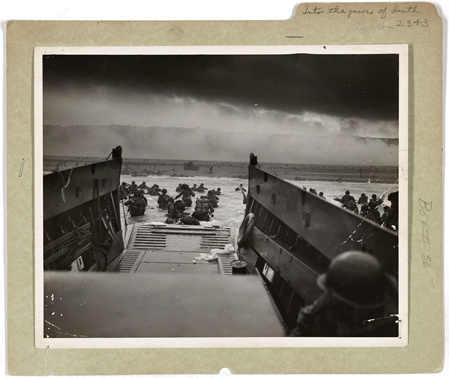
Teaching World War I and World War II
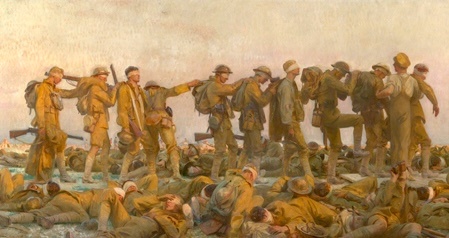
"Teaching World War I and World War II" will take place on the campus of Texas A&M University in College Station from June 22–25, 2026. Topics to be addressed include the causes and effects of World War I and World War II; the reasons for U.S. involvement; major military operations; the Holocaust; the experiences of women, African Americans, and Latinos during World War II; the leadership of Franklin D. Roosevelt and Harry S. Truman; Texas and Texans during World War II; and the legacies of both conflicts.
Faculty for the program include Charles Flanagan (educational consultant), Justin Hart (Texas Tech University), Jeremi Suri (The University of Texas at Austin), Lora Vogt and Nicole Dobronski (National World War I Museum and Memorial), Kara Dixon Vuic (Texas Christian University), Geoffrey Wawro (University of North Texas), and Terry Anderson, Jason C. Parker, John Schussler, and Adam Seipp of Texas A&M University.
These institutes are open to all middle and high school humanities teachers and will focus on topics and skills central to the state's secondary-level U.S. history, Texas history, and English language arts curricula. Priority consideration will be given to early-career teachers in low-performing schools and districts.
More information about each program is available in the Education section of the Humanities Texas website. Teachers interested in attending should submit an online application as soon as possible, as admissions are rolling and space is limited.
The institutes are free to teachers and their schools. Participants will receive a $400 stipend, CPE credit, and a wealth of curricular materials. CPE hours will be based on attendance and adjusted if a participant misses any portion of the program.
Teachers traveling to an institute from out of town will be reimbursed for approved travel costs up to $300.
Please note that, due to space limitations, you must be a registered participant to attend any of the in-person institutes.
These programs are made possible with major funding from the State of Texas, with ongoing support from the National Endowment for the Humanities.