Articles
Throughout fall 2026, Humanities Texas is offering online and in-person professional development programs for Texas social studies and English language arts teachers.
In-person workshops include "Teaching the Texas Revolution" in Houston (October 7), "Teaching Hamlet" in Houston (October 8), "Teaching Short Fiction" in Austin (October 15), "Teaching the Cold War" in Dallas (October 21), and "Teaching the Early American Republic" in San Antonio (October 27).
Webinars include "Ethical Implications of AI in the Humanities Classroom" (September 21), "Interdisciplinary Approaches to Teaching the Declaration of Independence" (September 28), "Teaching Great Expectations" (October 20), and "Digital Timeline Tools in the Humanities Classroom" (November 4).
All programs will emphasize close interaction with scholars, the examination of primary sources and texts, and the development of effective pedagogical strategies and engaging assignments and activities.
Ethical Implications of AI in the Humanities Classroom (Webinar)
"Ethical Implications of AI in the Humanities Classroom" will take place on Zoom from 5:00–6:15 p.m. CT on September 21, 2026.
The webinar will consider the ethical implications of AI use in the secondary-level humanities classroom and how teachers and students can critically engage with AI. Participants will gain access to resources on how to discuss AI resistance with students by privileging ethical considerations while making space for exploration and experimentation. Amanda Licastro (Swarthmore College) will lead the webinar.
Interdisciplinary Approaches to Teaching the Declaration of Independence (Webinar)
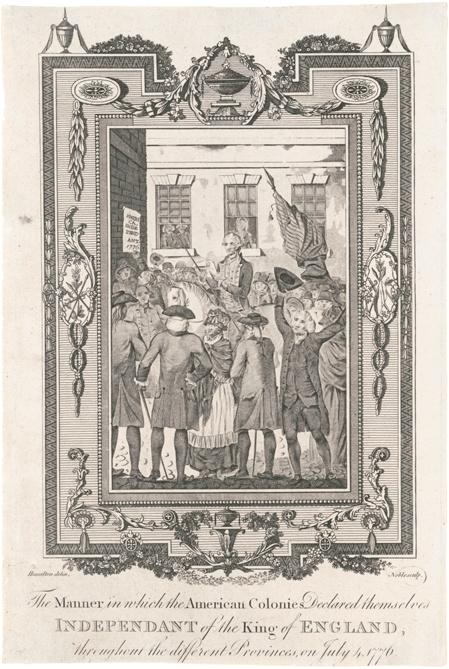
"Interdisciplinary Approaches to Teaching the Declaration of Independence" will take place on Zoom from 5:00–6:15 p.m. CT on September 28, 2026.
This interdisciplinary webinar for social studies and English language arts teachers will focus on the Declaration of Independence and other key founding-era primary sources. Participants will explore ways to help students learn about the Revolutionary era through selected texts while building analytical skills for the future. Lorri Glover (Saint Louis University) will lead the webinar.
Teaching the Texas Revolution (In-Person Workshop)
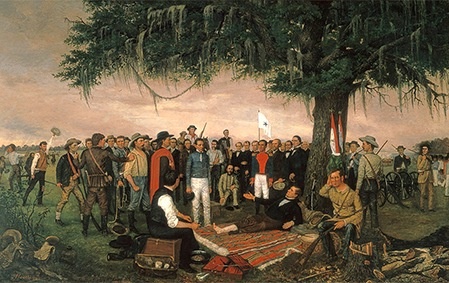
"Teaching the Texas Revolution" will take place at Asia Society Texas Center in Houston on October 7, 2026.
The workshop will cover causes of the Texas Revolution; key battles, events, and significant individuals; and classroom resources for teaching the Texas Revolution. Program faculty includes Courtney Abubakar (Texas History for Teachers), Nicholas Cox (Houston City College), Jesús F. de la Teja (former Texas State historian), and Sam Haynes (The University of Texas at Arlington).
Teaching Hamlet (In-Person Workshop)
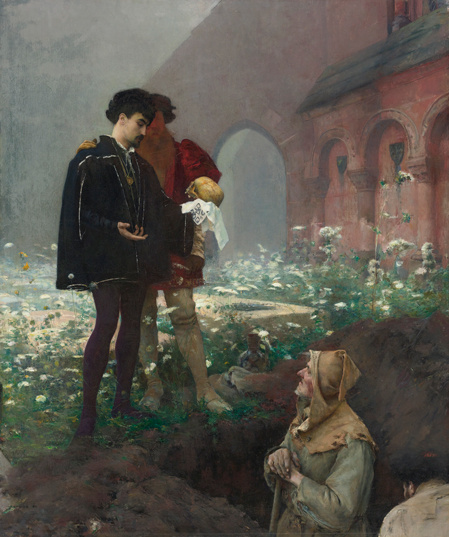
"Teaching Hamlet" will take place in Houston on October 8, 2026. The venue will be announced in the coming weeks.
The workshop will emphasize historical contexts for reading Hamlet, social and cultural approaches to teaching the play, and performance-based pedagogy. Program faculty includes Ann Christensen (University of Houston), Vanessa I. Corredera (Baylor University), Matthew Harrison (West Texas A&M University), and Robin Grace Soto (Camp Shakespeare, The University of Texas at Austin).
Teaching Short Fiction (In-Person Workshop)
"Teaching Short Fiction" will take place at the Thompson Conference Center at The University of Texas at Austin on October 15, 2026.
The workshop will focus on strategies for teaching the works of major nineteenth-, twentieth-, and twenty-first-century U.S. writers of short fiction and creative writing pedagogy. Program faculty includes Sarah Gilbreath Ford (Baylor University), Maryse Jayasuriya (Saint Louis University), and Peter Turchi (University of Houston).
Teaching Great Expectations (Webinar)
"Teaching Great Expectations" will take place on Zoom from 5:00–6:15 p.m. CT on October 20, 2026.
The webinar will provide strategies and resources to engage students in reading and understanding Great Expectations. Participants will explore ways to help students become better close readers of novels, while also learning about nineteenth-century culture and society. Particular attention will be paid to Dickens’s use of the coming-of-age narrative, which remains a popular and significant storytelling genre today. Allen MacDuffie (The University of Texas at Austin) will lead the webinar.
Teaching the Cold War (In-Person Workshop)
"Teaching the Cold War" will take place in Dallas on October 21, 2026. The venue will be announced in the coming weeks.
The workshop will cover the origins of the Cold War; Cold War conflicts such as Cuba, Korea, and Vietnam; the end of the Cold War and its legacy; and teaching the Cold War through film. Program faculty includes Gregory A. Daddis (Texas A&M University), Justin Hart (Texas Tech University), and Mark Atwood Lawrence and Jeremi Suri of The University of Texas at Austin.
Teaching the Early American Republic (In-Person Workshop)
"Teaching the Early American Republic" will take place at Region 20 Education Service Center in San Antonio on October 27, 2026.
The workshop will cover the presidency; foreign policy in early America and the War of 1812; democracy and citizenship in the early republic; and the creation of the federal judiciary and the Marshall Court. Program faculty includes Kate Brown (Western Kentucky University), Denver Brunsman (George Washington University), Joseph F. Kobylka (Southern Methodist University), and Sarah Purcell (Grinnell College).
Digital Timeline Tools in the Humanities Classroom (Webinar)
"Digital Timeline Tools in the Humanities Classroom" will take place on Zoom from 5:00–6:15 p.m. CT on November 4, 2026.
Participants will learn how to create and assign digital timelines and practical ways students can organize and synthesize research, evaluate sources, and articulate this research chronologically through multimedia digital storytelling. Lorena Gauthereau (University of Houston) will lead the webinar.
These workshops and webinars are open to all middle and high school social studies, language arts, and humanities teachers but will focus on topics and skills central to the state's secondary-level U.S. history, Texas history, and English language arts curricula. Priority consideration will be given to early-career teachers in low-performing schools and districts.
More information about each program is available in the Education section of the Humanities Texas website. Teachers interested in attending should complete the online application form as soon as possible.
You must be a registered participant to attend any of the programs.
Participants will receive CPE credit and a wealth of curricular materials. CPE hours will be based on attendance and adjusted if a participant misses any portion of the program.
These programs are made possible with support from the State of Texas and the National Endowment for the Humanities.